The place took its name from a ferryman. Francis Chadsey, an English Quaker from Wiltshire, purchased 500 acres along the Brandywine in the 1680s. His son, John Chads, inherited the plantation and, around 1725, built a bluestone house on the banks of the creek — the historic John Chads House still stands a stone’s throw …

Part 2 - 1730's Chads' Ferry & the Ford
Quaker crossing on the great road

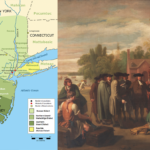
By 1700, English Quakers made up most of the population here, farming the rolling hills and raising meeting houses. In 1707, “Ye Great Road to Nottingham” — now U.S. Route 1, the Baltimore Pike — was laid out from Baltimore to Chester, one of five main routes out of Philadelphia, turning this quiet valley into a crossroads.
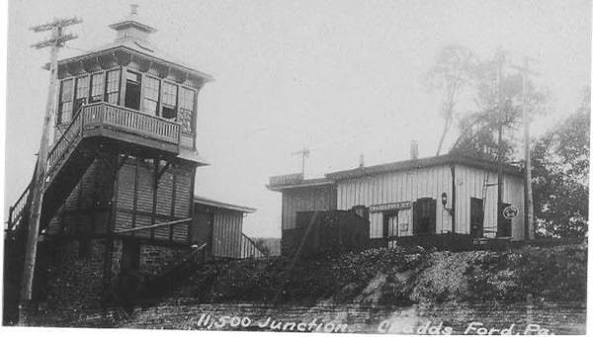
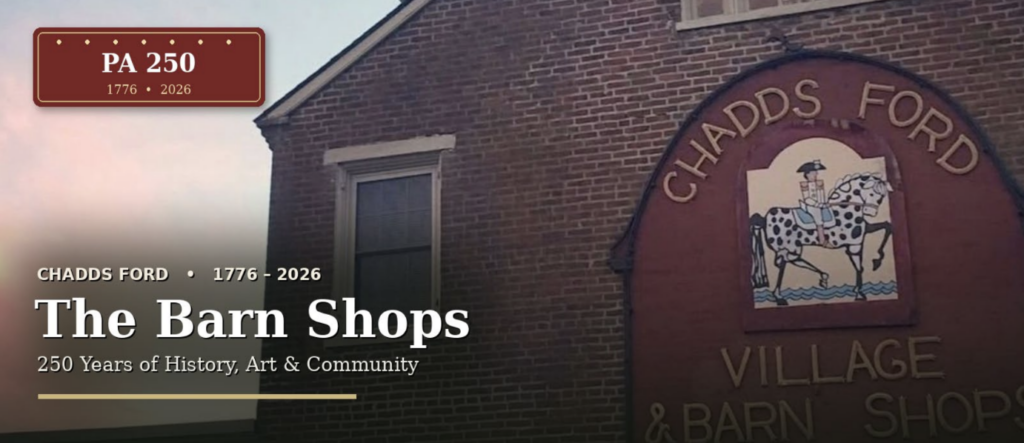
The Barn Shops sit today right along this historic artery. The place took its name from a ferryman. Francis Chadsey, an English Quaker from Wiltshire, purchased 500 acres along the Brandywine in the 1680s. His son, John Chads, inherited the plantation and, around 1725, built a bluestone house on the banks of the creek — the historic John Chads House still stands a stone’s throw away, near the c. 1714 Barns-Brinton House. In the 1730s and 1740s Chads operated a ferry, a gristmill, and a tavern
at the crossing — small industries that formed the nucleus of a community. Travelers came to call the spot simply “Chads’ Ford.”
This is the deep pattern of the place: enterprise rooted in the land, at a crossing where commerce, travel, and everyday life meet. The Barn Shops stand today only a musket-shot from that original ford — heirs, in the most literal sense, to John Chads’ idea that a good crossing is a good place to gather, do business, and build something lasting.
Part 3 – 1777 The Battle of Brandywine Coming Soon