When the American Revolution came, it came here — on a scale seen nowhere else in the war. On September 11, 1777, the hamlet of Chadds Ford, populated mostly by peaceful Quakers, hosted the largest single-day battle of the American Revolution. More troops fought at Brandywine — roughly 29,000 — than at any other engagement …

Part 3 | 1777 - Battle of Brandywine
Largest battle of the Revolution

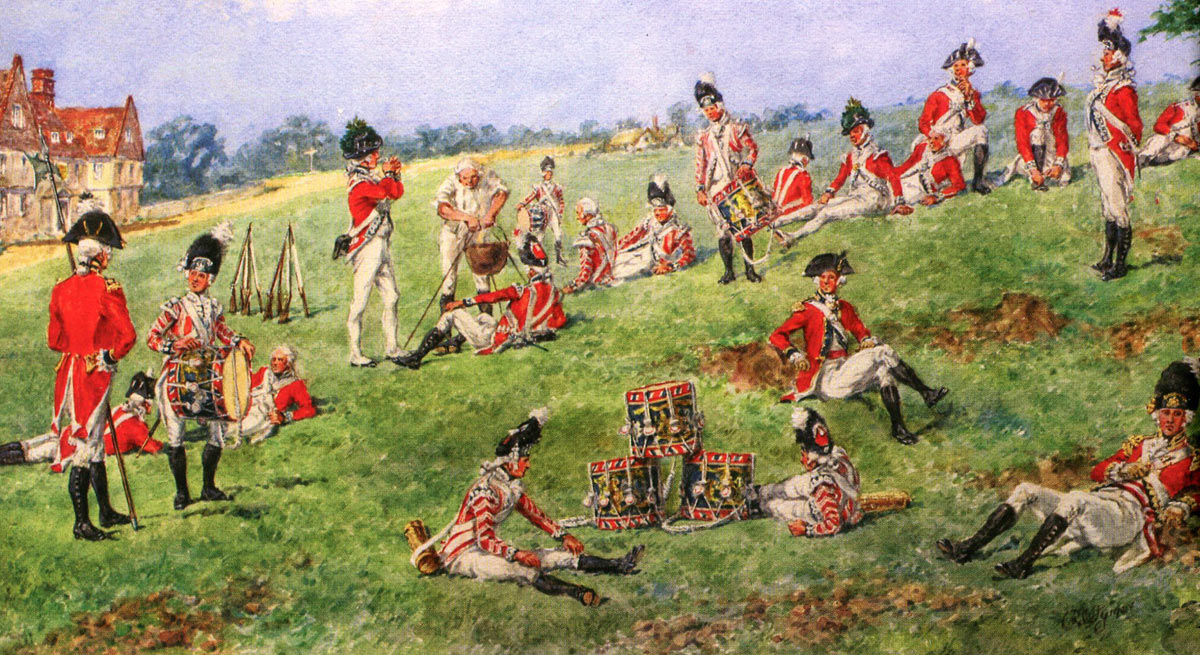
When the American Revolution came, it came here — on a scale seen nowhere else in the war. On September 11, 1777, the hamlet of Chadds Ford, populated mostly by peaceful Quakers, hosted the largest single-day battle of the American Revolution. More troops fought at Brandywine — roughly 29,000 — than at any other engagement of the war, and the fighting lasted some eleven hours, longer than any other single day of the Revolution.
General George Washington chose the high ground east of the Brandywine to halt General Sir William Howe’s advance on Philadelphia, then the American capital. Chadds Ford was the most direct crossing on the road from Baltimore to Philadelphia — the last natural line of defense before the Schuylkill. Washington made his headquarters at the Benjamin Ring house and quartered the young Marquis de Lafayette nearby at the Gideon Gilpin house.
The battle turned on the ground itself. Assured that the upper fords were too distant to matter, Washington left his right flank unanchored. Howe, guided by Loyalist scouts, marched the bulk of his army north, crossed the undefended fords, and swung in behind the American right. As that flank buckled near Birmingham Meeting House, Lieutenant General Wilhelm von Knyphausen launched his own assault straight across Chadds Ford.
“The troops are in good spirits, and I hope another time we shall compensate for the losses now sustained.” — George Washington, after Brandywine
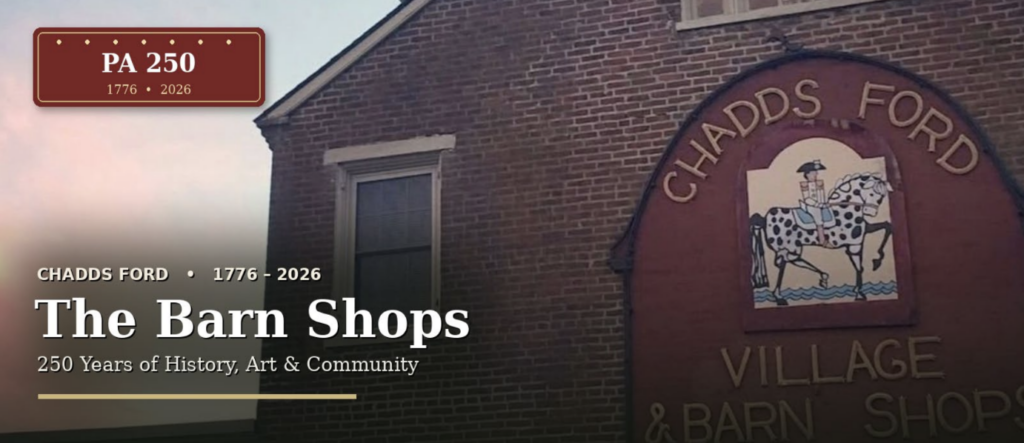
Here, on the very ground beside today’s Barn Shops, “Mad” Anthony Wayne’s Pennsylvania Division and William Maxwell’s light infantry met the crossing head-on. A four-gun battery overlooking the ford — set on the rise at what is now the Joseph Davis Tract, immediately beside the Barn Shops — traded fire across the water. The American line eventually gave way, but Nathanael Greene’s division fought a stubborn rear-guard action that let Washington’s army escape intact. Lafayette, wounded in the leg while rallying the troops, stayed on the field to organize an orderly retreat — his first American battle, and the beginning of a legend.
Brandywine was a British victory, but not a decisive one. Howe took Philadelphia two weeks later, yet the Continental Army had survived the full weight of the British war machine and lived to fight another day — through Valley Forge, only a winter away, and on to eventual independence. This ground was not peripheral to the Revolution. It was, for one long September day, its very center.
Part 4 – 1900’s Brandywine School of Art Coming Soon